How to Seat Wedding Guests Who Don't Know Anyone

Every wedding has them: the colleague you really like, the friend who moved here last year, your college roommate's new boyfriend. They know you, and nobody else. Where they sit decides whether they have the time of their lives or check their phone until the cake.
Never create a "leftovers table"
Putting all the guests who don't fit anywhere at the same table is tempting. It almost always ends in awkward silence. A table works when people share something: an age, a city, a job, a sense of humor.
Find the connection
Think about what each "solo" guest has in common with your other groups:
- Same field: your engineer friend with your cousin who works in tech.
- Same stage of life: young parents together, recent grads together.
- Same interests: the runners, the foodies, the board game people.
- Same place: guests who live in the same city can even share a ride home.
Seat them next to a "connector"
Every friend group has one: the person who talks to everyone and introduces people naturally. Place your solo guests next to them, and brief them in advance: "Can you take care of Sam? He doesn't know anyone."
Two is better than one
If you have several guests who know nobody, seat them in pairs at different tables rather than one alone per table. Two newcomers feel like a team; one feels like an outsider.
Plus-ones sit with their date. Always.
It is the most common mistake on our list of seating chart mistakes. A plus-one who is separated from the only person they know will remember your wedding for the wrong reason.
Introduce them before the wedding
If you host a welcome drink or a rehearsal dinner, invite the solo guests. By the reception, they will already have familiar faces around the room.
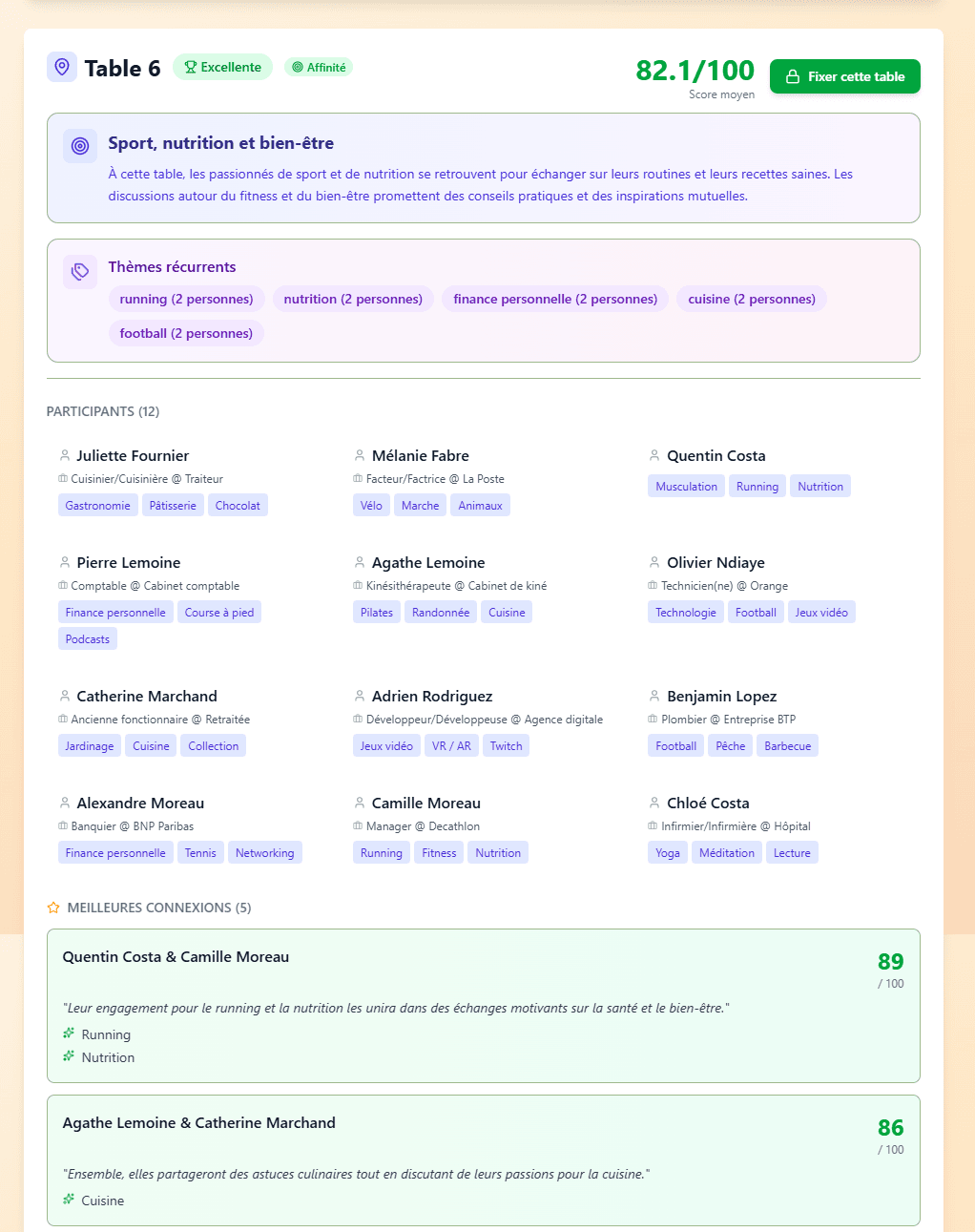
In Tabbl, you can add each guest's age and interests, and the AI uses them to seat people who don't know anyone next to guests they will actually get along with.
Ready to make your seating chart?
Tabbl builds your seating chart in seconds with AI
Try Tabbl for free